Draping
This page highlights the skills and techniques I developed in my Draping class, where I learned to create garment designs directly on the dress form using fabric manipulation and draping principles. Through these projects, I gained hands on experience shaping fabric to achieve desired silhouettes, experimenting with different materials, and translating design ideas into three-dimensional forms. This process strengthened my understanding of garment construction, fit, and the relationship between fabric and form.

Describe your image
Describe your image
Understanding draping techniques is essential for my goal of becoming an assistant designer. The hands on skills I developed allow me to communicate ideas clearly through three dimensional fabric manipulation, create accurate garment structures, and translate concepts into patterns ready for production all crucial for success in a professional design environment.
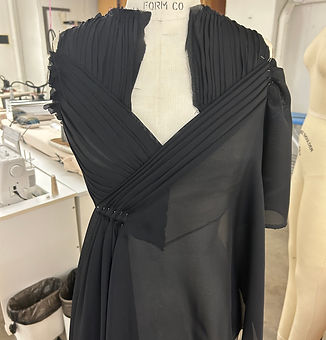
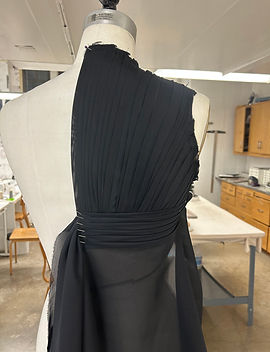
In today’s fashion industry, mastering draping techniques is key to creating accurate and professional designs. Draping allows designers to work directly with fabric, experiment with shapes and textures, and ensure every detail is carefully considered from initial concept to the finished garment.


Project: Unconventional Rings Gown
Description: This look features a floor length draped gown that combines structure and movement. I used metal rings as the focal unconventional element, incorporating them into the belt and bodice to create cutout details and dynamic tension within the design. The rest of the dress was draped and pleated to form soft, fluid folds that contrast the sleek, fitted top.
Skills Demonstrated: Draping, pleating, fabric manipulation, garment construction, and the integration of unconventional materials into wearable design.
Visuals: Draped muslin samples, detail shots of ring placement, pleating progress photos, and the final illustrated look.
Reflection: This project allowed me to experiment with balance by combining structure with fluidity through draping. I learned how to enhance a designs visual rhythm by using rings as both functional and decorative elements while maintaining a cohesive silhouette.